____
Hi Hugh – tell us about Vena’s latest AI capabilities that empower finance professionals?
At Vena, a big shift we’re focusing on right now is helping finance teams transition from AI-assisted productivity to AI-powered performance. Or, more simply, moving from insight to action. At our annual conference Excelerate Finance Fest, we announced several innovations that support that shift, including the general availability of Vena Planning Agent and Vena MCP Server, as well as a unified data layer across Vena and Acterys. We also launched Vena Financial Consolidation, an Excel-native, AI-enabled product designed to help finance teams close faster with audit-ready confidence.
What’s powerful about these capabilities is they bring AI into the flow of work, inside the tools finance teams already trust like Excel, Power BI and the broader Microsoft ecosystem. Vena Planning Agent helps users generate forecasts, update plans and apply scenario logic using natural language, while MCP Server connects AI tools like Claude and Copilot to live, governed Vena data with permissions, approvals and audit trails all intact.
Our goal with each new innovation is to ultimately empower finance teams to turn trusted data into governed actions, so they can plan and make decisions with greater speed, control and confidence.
What challenges do finance teams face when adopting new AI-powered fintech and unified platforms? Some tips?
A main challenge for finance teams is mistaking AI activity for AI value. We all feel the pressure right now to launch pilots, deploy agents and show progress, but finance teams need to be disciplined about where AI can actually improve outcomes. AI can make it very easy to create something that looks useful quickly, whether it’s a model or report. The harder question is whether the output can operate reliably inside the business.
I would recommend starting with the foundation. Before scaling AI, finance leaders need to make sure their data is governed, their workflows are connected and the right controls are in place. AI becomes valuable when teams can trust the data it uses, understand the context behind its recommendations and write outputs back into the business process with the right approvals and auditability.
For teams who have adopted systems like these, how can they bridge the insights-to-action gap across departments?
Many organizations have improved their planning and reporting, yet execution slows down when finance, operations, IT and business teams work from disconnected tools or manual handoffs. Bridging the decision latency gap means connecting the systems involved in decision making, not simply making more dashboards.
Again, that’s why it’s critical that planning happens in the flow of work. Finance could prefer Excel, while operational teams prefer Power BI. With Vena and Acterys, those experiences stay connected through a governed data foundation, so operational inputs can flow into financial plans and finance-led decisions stay aligned with what’s happening across the business.
As most tools become AI-powered, how can CFOs and finance heads ensure a proper balance of data health and trust? How can they drive AI governance in this area?
CFOs and finance leaders must treat AI governance as a finance operating discipline. They need visibility into the data sources AI relies on and the controls that determine who can approve or act on its recommendations.
The balance comes from pairing AI with human judgment and enterprise control. CFOs should define where AI can assist, where human review is needed and how the outputs are ultimately validated. Above all else, AI outputs must be explainable and auditable if they are going to support actual business decisions.
Read More on Fintech : Global Fintech Interview with Baran Ozkan, co-founder & CEO of Flagright
What trends and norms will shape the future of global fintech?
If you look back over the past 20 years, each major technology wave promised to help enterprises move faster. Web services, APIs and cloud platforms have all expanded what systems can do. But many of the same constraints kept showing up: data was hard to govern, or systems didn’t fully work together and workflows couldn’t reliably translate into outcomes.
AI is different because it changes what people can do, not just what systems can do. It helps finance teams analyze faster, model faster and generate answers faster. But that also moves the constraint. Now, the challenge is whether organizations can turn those faster insights into on-time execution. That’s why the next era will be defined by orchestration: people, data, workflows, agents working together with the right controls, so teams can move from insight to on-time execution across the business.
A few top fintech innovators you’d like to shout out (and why) in this chat before we wrap up?
Both Databricks and Snowflake are pushing the frontier edge of AI and data innovation. While Databricks doesn’t directly touch fintech, they have become increasingly foundational to modern financial data infrastructure. Databricks has laid the groundwork, understanding that AI advantages only come once governed enterprise data is connected to execution workflows. Plus, its push towards unified data and AI platforms is strategically critical for financial services.
Snowflake has a very similar story. What’s interesting is less so the warehouse itself but more so its shift towards AI-native data application layers. Financial Institutions are beginning to see that fragmented data architectures kill AI ROI before the models even matter.
Catch more Fintech Insights : Real-Time Payments and the Redefinition Of Global Liquidity
[To share your insights with us, please write to psen@itechseries.com ]

Vena’s Complete FP&A Platform empowers finance and accounting teams to plan with confidence, collaborate across the business, and go from data to decisions faster—all while working in the Microsoft tools they already use every day
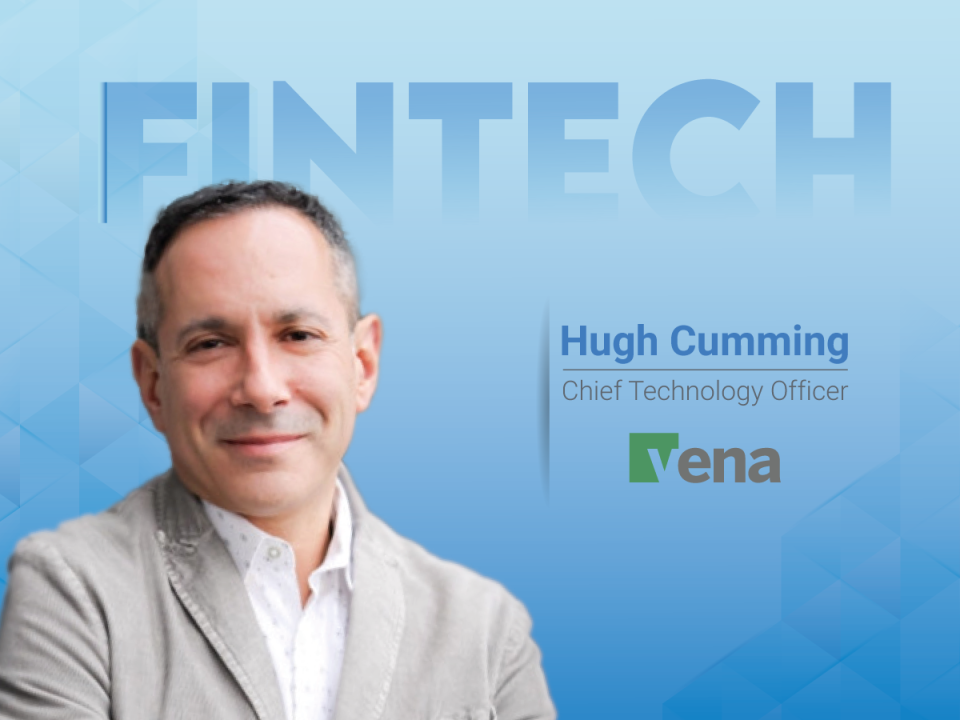
As Chief Technology Officer, Hugh is responsible for powering scale and industry-leading growth at Vena.