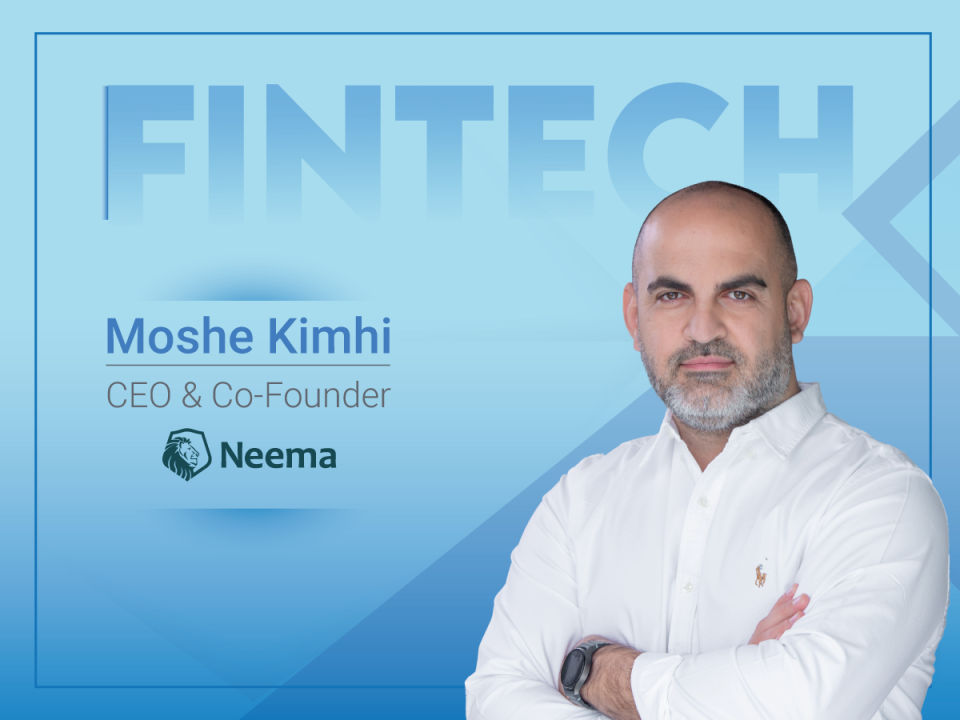
Moshe Kimhi, CEO & Co-Founder of Neema discusses the latest trends shaping the global payments landscape in this Global Fintech Series interview:
_______
Hi Moshe, take us through your recent partnership with Mastercard and how it benefits end users?
Our partnership with Mastercard is a major milestone because it reinforces what we’ve been building for years: a local payments infrastructure that enables global financial institutions to enter the Israeli market quickly and seamlessly. Mastercard Move selected Neema as its gateway into Israel, allowing businesses and individuals worldwide to send funds to Israeli bank accounts in real time through our local infrastructure. Instead of spending months navigating local technology, integrations, and regulatory complexity, partners can access Israel through a single API.
Through Neema, partners benefit from direct connectivity to Israel’s payment ecosystem, including MASAV and all Israeli banks, local account issuance, 24/7 real-time payment processing, and advanced capabilities such as Request to Pay. For end users, this translates into faster, more reliable transfers. And when a global leader like Mastercard entrusts its expansion into Israel to Neema, it sends a strong signal to the market. We’re already the infrastructure partner behind many international fintechs and financial institutions operating in Israel, and this partnership further strengthens our position as the preferred gateway for global players looking to enter the market.
What are some of the fintech innovations and trends shaping global payments and cross border payments today?
The payments industry is entering a new phase where innovation is no longer just about moving money faster or cheaper, but about making global payments as reliable and seamless as local ones. Two trends stand out to me in particular.
The first is the growing focus on payment reliability. As pricing has become increasingly competitive, businesses are looking beyond cost and asking whether payments will consistently reach their destination on time. This is driving demand for smarter payment infrastructure that can intelligently select the best route for every transaction and maximize success rates across different corridors.
The second is interoperability. The global payments ecosystem has become increasingly fragmented, with different payment rails, banks, wallets and local payment methods operating across markets. The ability to connect these systems seamlessly is becoming essential for delivering a truly global payment experience. Businesses want to access multiple markets through a single integration, while consumers expect international payments to feel as simple and reliable as domestic ones.
Ultimately, the future of cross-border payments will be shaped by infrastructure that makes global money movement as predictable and frictionless as local payments.
Read More on Fintech : Global Fintech Interview with Baran Ozkan, co-founder & CEO of Flagright
What about the state of AI in paytech needs more caution as AI becomes smarter? What should fintech innovators pay more attention to as they innovate with AI, keeping end user financial security a priority?
AI has the potential to transform the payments industry, particularly in areas like fraud detection, transaction monitoring, and operational efficiency. It can analyze enormous amounts of data in real time, helping financial institutions identify suspicious activity faster and respond more effectively.
At the same time, payments is an industry built on trust. As companies adopt AI, they need to ensure that decisions remain transparent, explainable, and fully compliant with regulation. Looking ahead, we’ll also see AI agents becoming more capable of initiating and managing financial transactions on behalf of users. That creates tremendous opportunities, but it also raises the stakes. If AI can autonomously move money, the industry will need even stronger authentication, authorization, and fraud prevention mechanisms to ensure those actions are secure and aligned with the user’s intent.
I believe AI should enhance payment infrastructure rather than replace human oversight. The goal is to make payments safer and more reliable, while ensuring security, compliance and customer trust remain at the heart of every transaction.
What will dominate the global fintech market in the next few years?
The next few years won’t be defined by a single technology, but by the convergence of several trends that make cross-border payments more seamless, intelligent and reliable. I believe three areas will have the biggest impact: payment reliability, interoperability and AI.
We’re already seeing the industry shift its focus from competing on price to competing on performance. Businesses want payments that arrive on time, every time, regardless of the corridor. At the same time, interoperability between different payment rails, banks and wallets will become increasingly important as the global payments ecosystem continues to fragment. And finally, AI will play a growing role in improving fraud detection, risk management and operational efficiency, helping financial institutions deliver better payment experiences while maintaining security and compliance.
Ultimately, the winners will be the companies that can combine these capabilities into a single, intelligent infrastructure that makes global payments feel as seamless and predictable as domestic ones.
Some thoughts on where Neema is headed as a platform before we wrap up?
At Neema, our mission has always been to make global payments feel as seamless and reliable as local ones. We believe that trust is built one successful transaction at a time, so everything we develop is focused on improving the reliability and intelligence behind every payment.
We’ll continue investing in technologies that optimize payment performance in real time, expand global connectivity, and remove complexity for our clients. Our vision is simple: regardless of where a payment is sent or how complex the underlying infrastructure is, our clients shouldn’t have to think about it. They should be able to trust that every payment will reach its destination through the best possible route.
Catch more Fintech Insights : Real-Time Payments and the Redefinition Of Global Liquidity
[To share your insights with us, please write to psen@itechseries.com ]

Neema created a global payments platform to make sending money across borders faster and accessible to everyone. What began as a digital account helping people send money home has grown into a global cross-border payment platform supporting financial institutions worldwide. Today, the company serves fintechs and EMIs, enabling them to move money seamlessly to over 120 countries through a single API. Neema’s proprietary Dynamic Routing® technology ensures every transaction finds the best possible route, creating a new standard in the industry.
Moshe Kimhi is the CEO and Founder of Neema, a global cross-border payments platform supporting fintechs, digital wallets, and financial institutions worldwide. Under his leadership, Neema has evolved from a consumer digital account into a global payments platform enabling reliable payout corridors across more than 120 destinations.